SKILLS
Analysis: SQL, Excel (pivot tables, Power Query), Python (pandas)
Reporting: Tableau, Looker Studio, PowerPoint
Certifications: Google Data Analytics Certificate
Languages: English (native), Spanish (conversational)
Which skills to list, how to lay them out so they're easy to scan, and a three-sentence summary you can adapt.
Short answer
Start from the job posting, not from a list of popular skills. Highlight every tool, method or certification it mentions, then keep the ones you could talk about for two minutes in an interview. Those go on the resume, using the posting's own wording where it's accurate (“Power BI”, not “BI tools”).
Leave soft skills out of the list. “Communication” or “team player” on a skills line proves nothing, and everyone writes them. Show them in your bullets instead: “Presented weekly pricing results to 12 store managers” says more about communication than the word does.
Put skills on a few labeled lines, separated by commas. Recruiters can scan it in seconds, and resume parsers read it as plain text. This is the layout every template here uses:
SKILLS
Analysis: SQL, Excel (pivot tables, Power Query), Python (pandas)
Reporting: Tableau, Looker Studio, PowerPoint
Certifications: Google Data Analytics Certificate
Languages: English (native), Spanish (conversational)
Examples of what belongs on the skills lines and what's better shown in bullets. Use the posting to decide which apply to you. Each field links to a full resume example.
| Field | On the skills lines | Show in bullets instead |
|---|---|---|
| Software engineering | Languages (Python, Java, TypeScript), frameworks (React, Spring), SQL, Git, AWS or GCP, testing tools | Code review, debugging under pressure, writing design docs |
| Data analysis | SQL, Excel (pivot tables, Power Query), Python or R, Tableau or Power BI, A/B testing | Explaining numbers to non-analysts, questioning bad data |
| Nursing | State RN license, BLS and ACLS, Epic or Cerner charting, telemetry, IV therapy | Patient education, calm handoffs, charge nurse duties |
| Teaching | State license and grade band, Google Classroom, IEP and 504 plans, reading assessments | Classroom management, family communication |
| Marketing | HubSpot or Mailchimp, Google Analytics, Google Ads, Meta Ads Manager, SEO tools, Canva | Writing, campaign planning, working with sales |
| Sales | Salesforce or HubSpot CRM, prospecting tools, contract negotiation, forecasting | Quota attainment, building relationships, listening |
| Finance | Excel modeling, financial statements, NetSuite or SAP, variance analysis, budgeting | Attention to detail, presenting to leadership |
| Project management | Jira or Asana, MS Project, budgeting, risk logs, PMP or CAPM | Running meetings, managing vendors, keeping scope in check |
| Retail | POS systems, cash handling, inventory counts, scheduling software, merchandising | Customer service, training new staff, staying calm at rush hour |
| Graphic design | Figma, Adobe Illustrator, InDesign and Photoshop, typography, print production | Taking feedback, presenting concepts, hitting print deadlines |
The summary sits under your name and tells the reader how to read the rest of the page. Keep it to three sentences:
You can drop the “I” or keep it; both are normal, so just pick one. Skip adjectives like “passionate” and “results-driven”. The result in sentence two does that job.
Three examples, each written for a different situation:
SUMMARY
Data analyst with six years in retail and energy, most recently leading pricing analytics for a regional grocery chain. I built the weekly margin model the commercial team now plans from, which cut markdown waste by 9% in its first year. Looking for a senior analyst role where the work feeds real decisions.
SUMMARY
Registered nurse with three years on a 30-bed medical-surgical unit, including a year as relief charge nurse. Known on my unit for early recognition of deteriorating patients and clear handoffs to the ICU. BLS and ACLS certified, moving into critical care.
SUMMARY
Former middle school science teacher with seven years of classroom experience and three years training new teachers. Designed a two-day onboarding program that raised new-hire readiness from about half to over 80% in our survey. Moving into corporate learning and development.
Students and recent graduates usually don't need one. Your education and projects already say what you are, and a summary would push them down the page. A summary is most useful when you have a long history that needs a headline, or when your job titles don't make your direction obvious.
Tailor to a job picks the skills and writes the summary from your own resume lines and the job posting, and shows which line of your resume each sentence came from.
Each has labeled skills lines and comes as a Google Doc and a .docx.
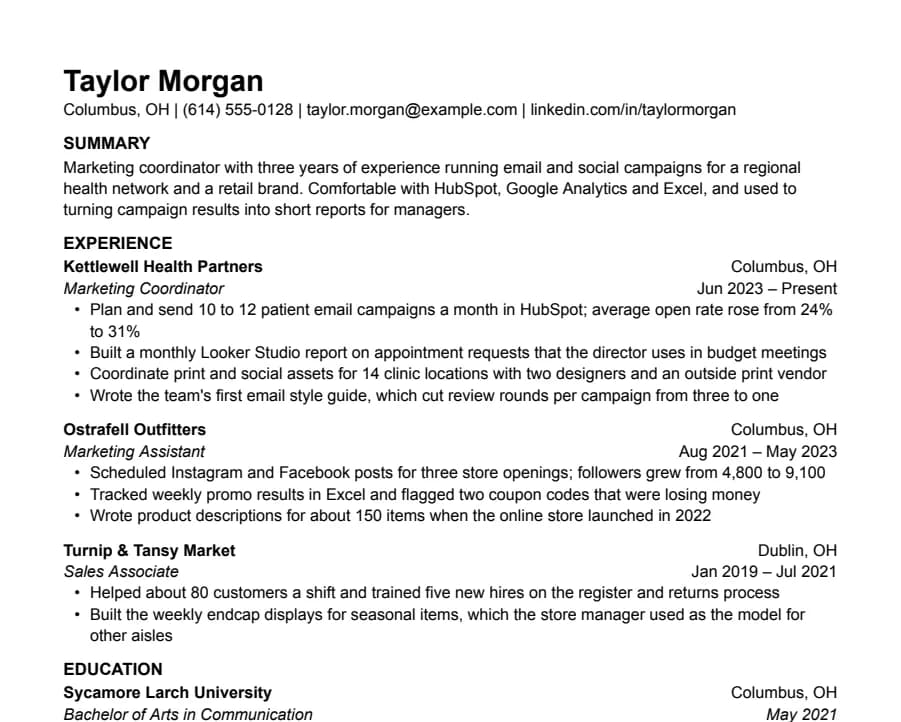
33/33 fields read
Nothing but text, left-aligned, in Arial. A safe default for any job when you don't want the layout to be noticed.
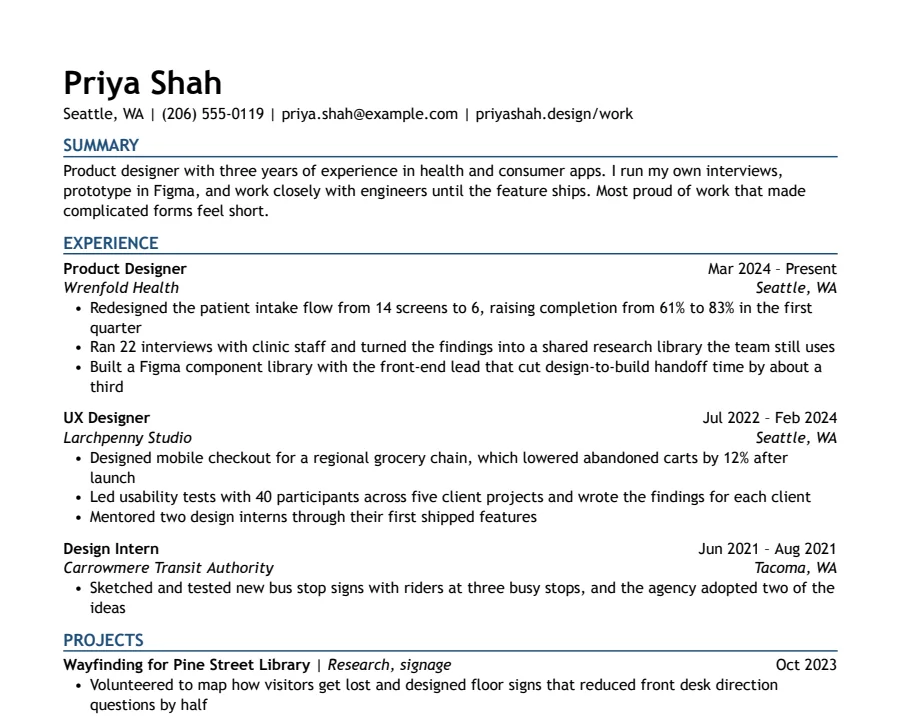
35/35 fields read
One ink-blue accent on headings and rules, with a summary up top. Clean enough for any parser, with a little more personality.
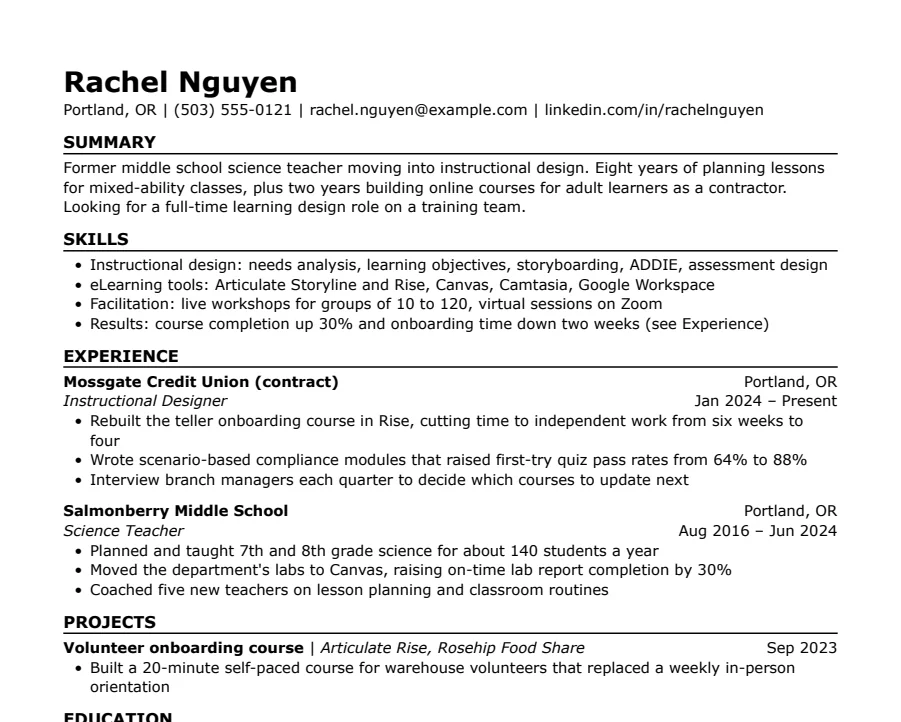
33/33 fields read
Summary and skills come before work history. Useful when you're changing careers or coming back after a gap.
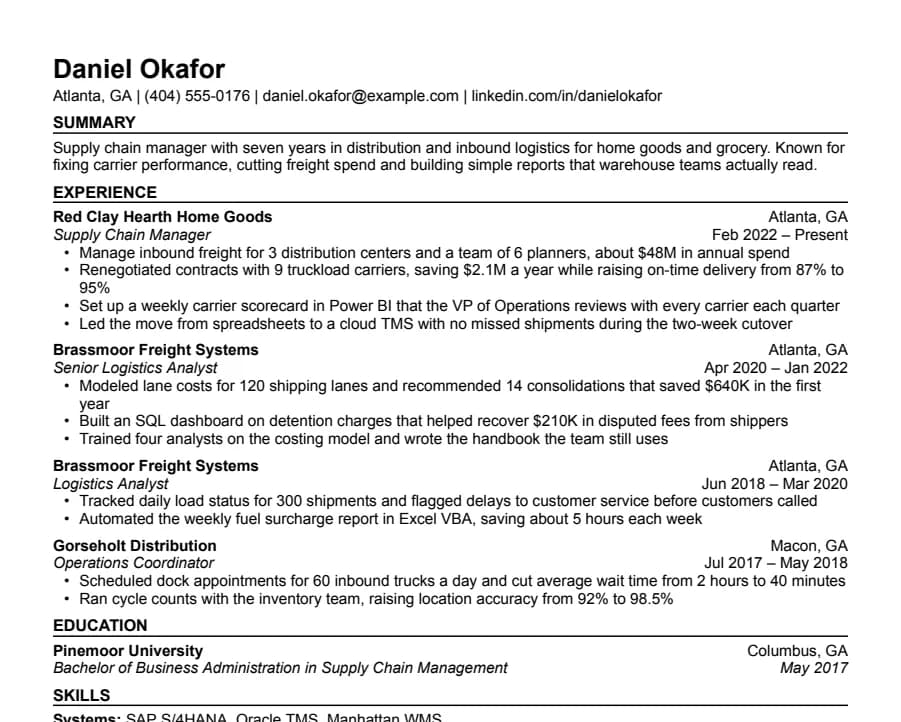
36/36 fields read
Half-inch margins and tight spacing for people with more experience than one page normally holds.
63/63 fields read
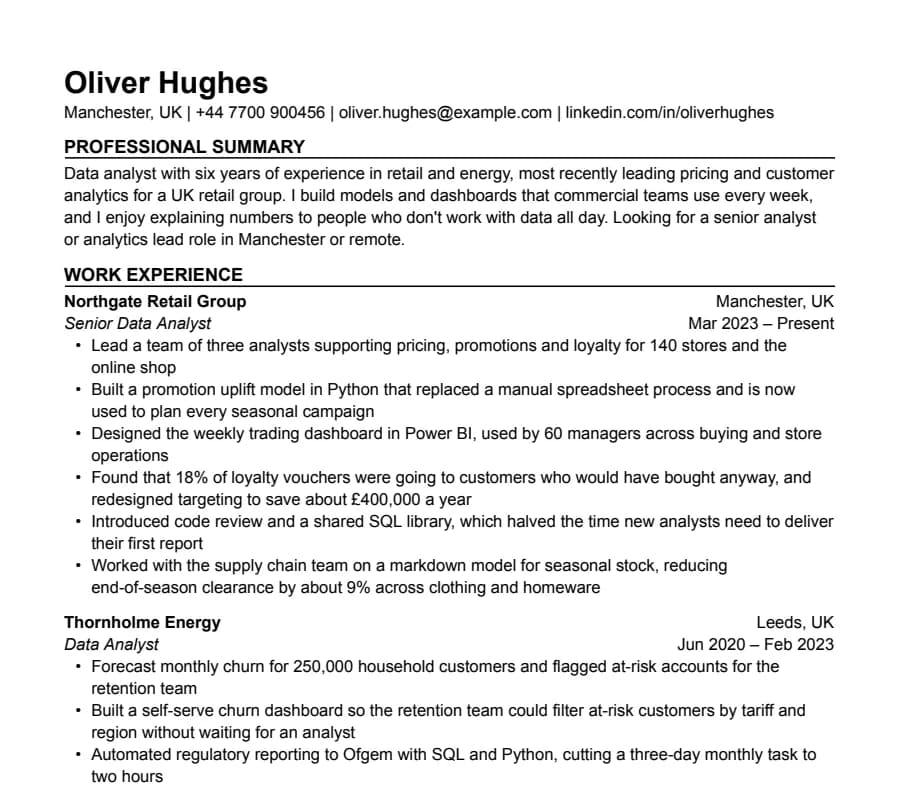
A4, no photo, a professional summary at the top and room for two pages. Written the way UK and European employers expect a CV.